


Most Canadian facility managers and operations teams start this decision at the wrong end. They compare upfront cost, coverage claims, and product photos first, and skip the one question that settles the machine class.
What sits on your floor at the end of a shift, and is that mess wet or dry?
That question gets harder from November to April. Environment and Climate Change Canada reports that an average of about 5 million tonnes of road salt goes onto national roadways each year. Salt, sand, and slush then get tracked indoors through entrances and parkades. The result is wet residue and dry grit on the same floor.
Choose the wrong class and your operation pays for that mistake every shift. A robotic sweeper cannot remove grease or wet soil, and a robotic scrubber cannot carry large volumes of dry debris through a long warehouse route.
The right choice comes down to five things: floor type, debris volume, route size, site conditions, and industry. This guide covers commercial facilities from warehouses and factories to offices, hotels, and retail stores.
Robotic Scrubber vs. Sweeper vs. 4-in-1: What Each One Actually Does
A robotic floor scrubber lays down water and detergent, agitates the surface, then recovers the dirty solution through its squeegee and vacuum system. A robotic floor sweeper stays completely dry, using brushes and a debris hopper to lift loose material off the floor. A 4-in-1 robot combines these jobs in one chassis, with less capacity for each. Many product pages blur these categories instead of drawing this line clearly.
| Machine Type | Best For | Where It Falls Short |
|---|---|---|
| Robotic scrubber (wet only) | Grease, spills, and embedded soil on hard floors | Cannot carry large volumes of dry debris |
| Robotic sweeper (dry only) | Dust, packaging scrap, gravel, and wide open routes | Leaves grease and wet soil behind |
| 4-in-1 robot | Mixed wet and dry floors, moderate debris, small and medium-sized indoor spaces | Smaller hopper and tank capacity than a dedicated machine |
Comparing the PUDU CC1 and the PUDU MT1 Series to Pick the Right Commercial Cleaning Robot
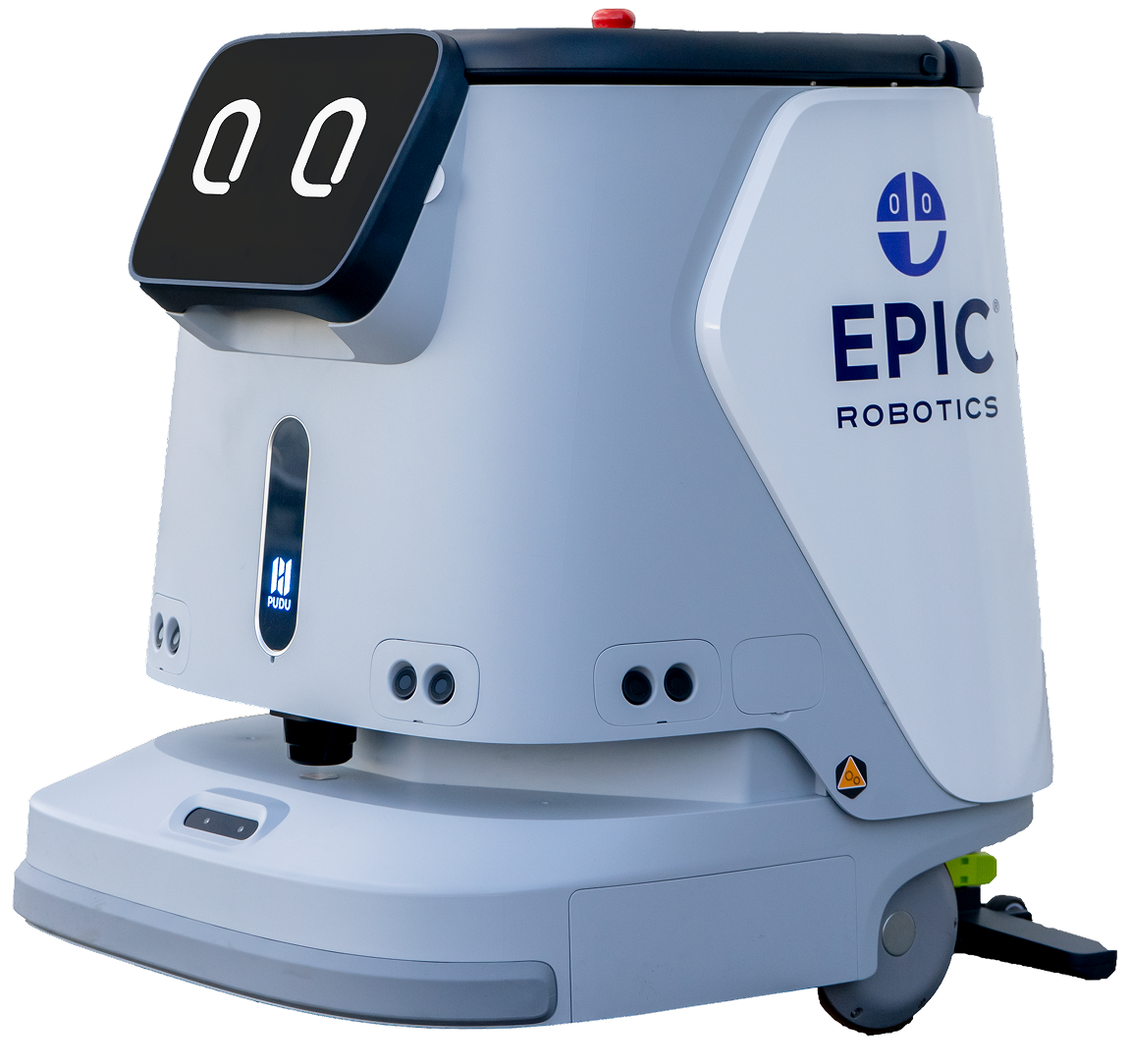
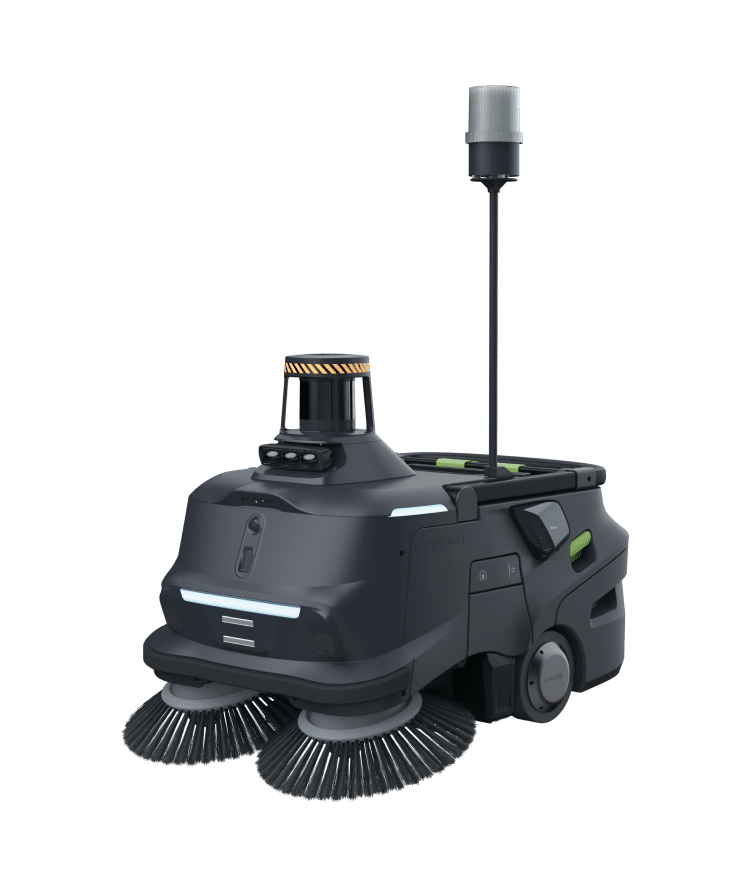
The PUDU CC1 and the PUDU MT1 series, both from PUDU Robotics, solve different cleaning problems in commercial facilities. The CC1 is a compact 4-in-1 cleaning robot for mixed indoor floor care. Within PUDU’s MT1 dry cleaning series, the PUDU MT1 Max is the sweeper built for large routes with heavy dry debris. PUDU says the MT1 Max covers areas of up to 100,000 m².
| Spec | CC1 (4-in-1) | MT1 Max (sweeper) |
|---|---|---|
| Cleaning modes | Scrub, sweep, vacuum, dust mop | Sweep |
| Cleaning width | 50 cm | 70 cm |
| Rated throughput | 700 to 1,000 m²/h | Up to 2,200 m²/h |
| Debris capacity | 2.5L dust bin | 35L trash bin |
| Water tanks | 15L clean, 15L waste | None |
| Min. path clearance | 70 cm | 75 cm |
| Best for | Mixed wet and dry floor care in offices, hotels, retail stores, and healthcare facilities | Heavy dry debris in warehouses, factory aisles, parkades, and semi-outdoor areas (IP54 rated) |
Two More PUDU Robots for Specific Floors
- PUDU MT1 Vac: the second robot in the MT1 series. It is a robotic sweeper and vacuum for carpet and fine dust in hotels, offices, airports, and schools, with HEPA 11 filtration.
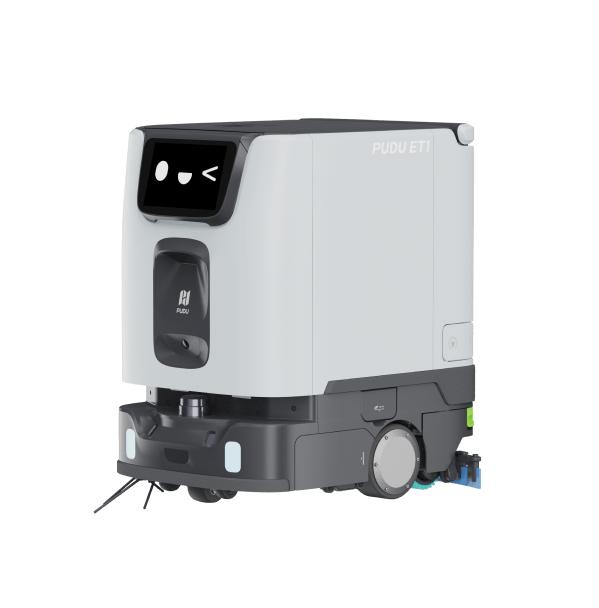
- PUDU ET1: a compact scrubber-dryer for small commercial spaces of 100 to 800 m², such as convenience stores, drugstores, and chain restaurants. It fits through aisles as narrow as 50 cm.
4 Question Framework That Decides Which Cleaning Robot You Should Pick
Work through these four gates in order to choose the right commercial cleaning robot for your industry. The first gate that returns a hard constraint decides your machine class. The remaining gates only narrow the model.
Is the soil wet or dry?
Grease, spills, scuff marks, and traffic film point toward a scrubber. Dust, packaging scrap, gravel, grit, and loose litter point toward a sweeper.
Wet floors carry a safety cost too. WorkSafeBC reports that roughly 20% of workplace injuries in B.C. are slips, trips, and falls. It also links icy and wet conditions to an 11% rise in these injuries during winter months.
Most commercial floors have some of both. The useful question is which problem is large enough to determine your cleaning program.
In a hospital or office, routine wet floor care may dominate even when light dry debris is present. In a warehouse or manufacturing plant, dry debris may accumulate long before the floor needs a wet pass.
How much dry debris does the floor generate per day?
For a sweeper, debris capacity can matter more than navigation features. If the hopper fills halfway through the route, staff must step in to empty it. That reduces the labour hours you planned to save and can prevent the robot from finishing its cleaning window.
Measure it on site, not from a brochure. Track what your custodial crew collects during a normal shift. Dust control matters here too. Facilities that handle raw materials or heavy machinery generate fine particulate that a basic sweep pass will not fully capture. Match dust control and hopper design to your actual daily load, not the published cleaning rate.
How much floor do you cover per cleaning window?
Divide your cleanable floor area by the time available for cleaning. Then compare the result with the manufacturer’s published performance.
Do not stop at the hourly number. Ask whether the robot can finish the actual route after accounting for charging, turning, obstacles, debris collection, water management, and other interruptions. A machine with a higher published rate is not automatically the better choice if it cannot complete your real route consistently.
How mixed and how occupied is the route?
Carpet transitions, tight aisles, furniture, and daytime foot traffic favour a compact multi-function machine when the cleaning load is moderate. Long open runs with a stable layout favour a dedicated sweeper when dry debris is the dominant problem.
Building type matters most here. A university, office campus, hotel, or retail centre can have several floor types and changing traffic patterns in the same shift. A distribution centre may have a much simpler floor but a much heavier debris load.
Which Type of Autonomous Cleaner Does Your Industry Actually Need?
PUDU positions the CC1 for mixed indoor environments and the MT1 Max for large-scale dry sweeping. Choose a 4-in-1 for mixed cleaning needs, a dedicated sweeper for heavy dry debris, and both when your facility needs both jobs done at scale.
Cleaning pressure looks different in every sector. Canada’s accommodation sector lost about 18% of its light duty cleaners between 2019 and 2022, and Tourism HR Canada did not expect its workforce to fully recover until 2027. Warehouses face the opposite problem: more floor to cover, with about 8.9 million sq ft of new industrial space added in Q4 2025 alone, according to Altus Group.
| Industry | Common Cleaning Problem | Best Fit |
|---|---|---|
| Healthcare | Wet floors from manual mopping, winter slush at entrances, and night shifts that are hard to staff | CC1 (MT1 Vac for carpeted lounges) |
| Education | Corridors and cafeterias to clean overnight before classes, with small custodial teams | CC1 (MT1 Vac for libraries) |
| Offices | Salt and slush in lobbies, and carpet on tenant floors | CC1 (MT1 Vac for carpeted floors) |
| Hospitality | Winter slush in lobbies, quiet cleaning on guest floors at night, and housekeeping turnover | CC1 (MT1 Vac for carpeted corridors and ballrooms) |
| Retail | Wet floors in produce areas, dirt at entrances, and cleaning that must finish before opening | CC1 (ET1 for small stores of 100 to 800 m²) |
| Warehouses | Unpacking debris all day, debris that damages forklift tires, and cold storage floors that cannot be washed | MT1 Max |
| Manufacturing | Constant scrap, cleaning under machines, and metal dust that rules out wet scrubbing | MT1 Max |
| Airports and transportation | Slush and salt in arrivals halls, carpeted gate lounges, and constant debris at baggage claim. Toronto Pearson alone served 47.3 million passengers in 2025. | CC1, MT1 Vac, and MT1 Max, by zone |
| Parkades | Sand, grit, and debris on large paved areas with moving vehicles | MT1 Max |
The Right Cleaning Robot Is the One That Fits Your Route
A longer feature list does not make the 4-in-1 the right pick by default. A higher throughput number does not make the MT1 Max the right pick either. The better machine is the one that matches your floor condition, debris load, route size, cleaning window, and operating environment.
Mixed indoor facilities with moderate debris get the most out of a compact 4-in-1 platform like the PUDU CC1, since flexibility matters more than raw throughput in that setting. Large open areas with heavy dry debris are usually better served starting with a dedicated sweeper like the MT1 Max. Carpeted spaces and small stores have their own fit: the MT1 Vac for carpet and fine dust, and the ET1 for small commercial floors. Facilities running both cleaning demands at once often get the most complete coverage by running a sweeper and a scrubber together rather than picking one machine to do both jobs.
Finding and keeping cleaning staff is getting harder. In B.C. alone, WorkBC forecasts 13,020 job openings for light duty cleaners between 2025 and 2035. That is close to half the 28,520 people who worked in the role at Statistics Canada’s 2021 Census. An autonomous cleaning robot takes on the repetitive floor routes, so custodial staff can focus on detail cleaning and higher-value tasks.
The only way to know which option fits your site is to look at the route itself. A facility assessment settles this fastest. Epic Robotics, a Calgary-based, Canadian-owned distributor of PUDU commercial cleaning robots, reviews your cleaning area, floor conditions, debris load, route layout, cleaning window, and expected human intervention before recommending an autonomous cleaning robot.
Book a facility assessment with Epic Robotics to get a recommendation built around your actual route, not a generic spec sheet.