




Autonomous Cleaning Robot ROI: Costs, Payback and Savings

Autonomous cleaning robots pay for themselves in most facilities that clean large hard-floor areas daily, typically within 14 to 24 months. In smaller buildings, or ones cleaned only a few times a week, that payback stretches out and the case gets harder to defend.
The right place to start is your actual cleaning labour cost, not a supplier’s payback estimate. Labour is usually the biggest factor in the decision. Cleaning wages keep rising, night shifts are hard to staff, and high turnover makes consistent coverage expensive. The numbers therefore depend heavily on your location and how your facility operates.
Your autonomous cleaning robot investment comes down to four practical factors: loaded labour cost, floor area, cleaning frequency, and robot utilization. Work through each one before you rely on a generic ROI claim.
Why Does Manual Floor Cleaning Cost Rise Every Year?
Labour is the single biggest line item in most cleaning budgets, and it only moves in one direction. Most Canadian provinces raise the minimum wage every year, often tied to inflation, so your manual cleaning bill grows even if your facility doesn’t change at all.
Provincial wage floors already vary by more than $3 an hour. Alberta’s minimum wage sits at $15.00 an hour in 2026. Quebec is at $16.60, Ontario at $17.95, and British Columbia at $18.25, with the federal rate at $18.15, according to employment law firm Littler. A facility in BC pays noticeably more for the same hour of floor cleaning than an identical facility in Alberta. That gap is why the same robot recovers its cost faster in a higher-wage province, and why your payback period depends on your location, not an industry average.
Canada’s janitorial services industry is valued at approximately $8.9 billion in 2026, according to IBISWorld. Facilities are already shifting part of that spend to automation. The Canadian commercial cleaning robot market is projected to grow from US$136.5 million in 2025 to US$510.3 million by 2033, a compound annual growth rate of about 17.9%, according to Cognitive Market Research.
Do Autonomous Cleaning Robots Really Save Money?
Yes. In commercial facilities with heavy repetitive floor cleaning, the labour they take over typically brings break-even within 14 to 24 months. Robot prices vary with size, cleaning functions, and docking setup, and industrial-grade cleaning robots range from about US$50,000 to US$150,000, according to DataM Intelligence.
For pricing on Epic Robotics’ commercial robots, contact our team for a quote and a free facility assessment. Here’s where the savings come from.
Robots Cover the Shifts That Go Unfilled
Full staffing on every cleaning shift is not something most facilities can guarantee. A robot cleaner doesn’t call in sick, doesn’t need a night-shift premium, and doesn’t leave a coverage gap when a role goes unfilled.
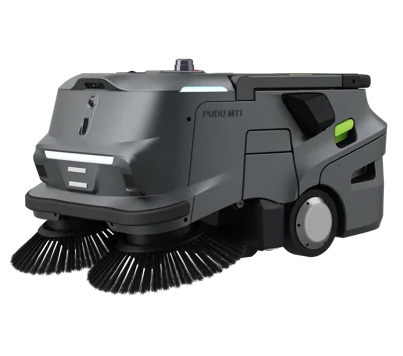
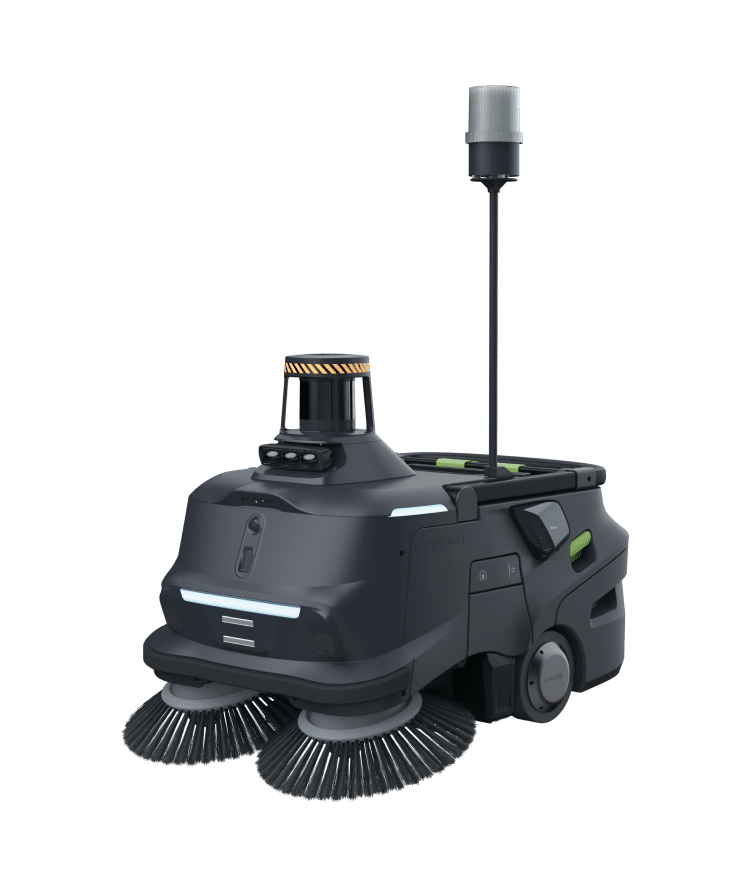
The real return comes from maximizing runtime. The PUDU MT1 Max is built for 24/7 continuous operation when it is paired with its automatic charging station.
Manual Cleaning Is Slower Than Most Facilities Assume
Manual cleaning also covers less floor than most schedules assume. Doors, elevator waits, breaks, and furniture all cut into each hour, so a cleaner’s real coverage falls well below what the task list suggests.
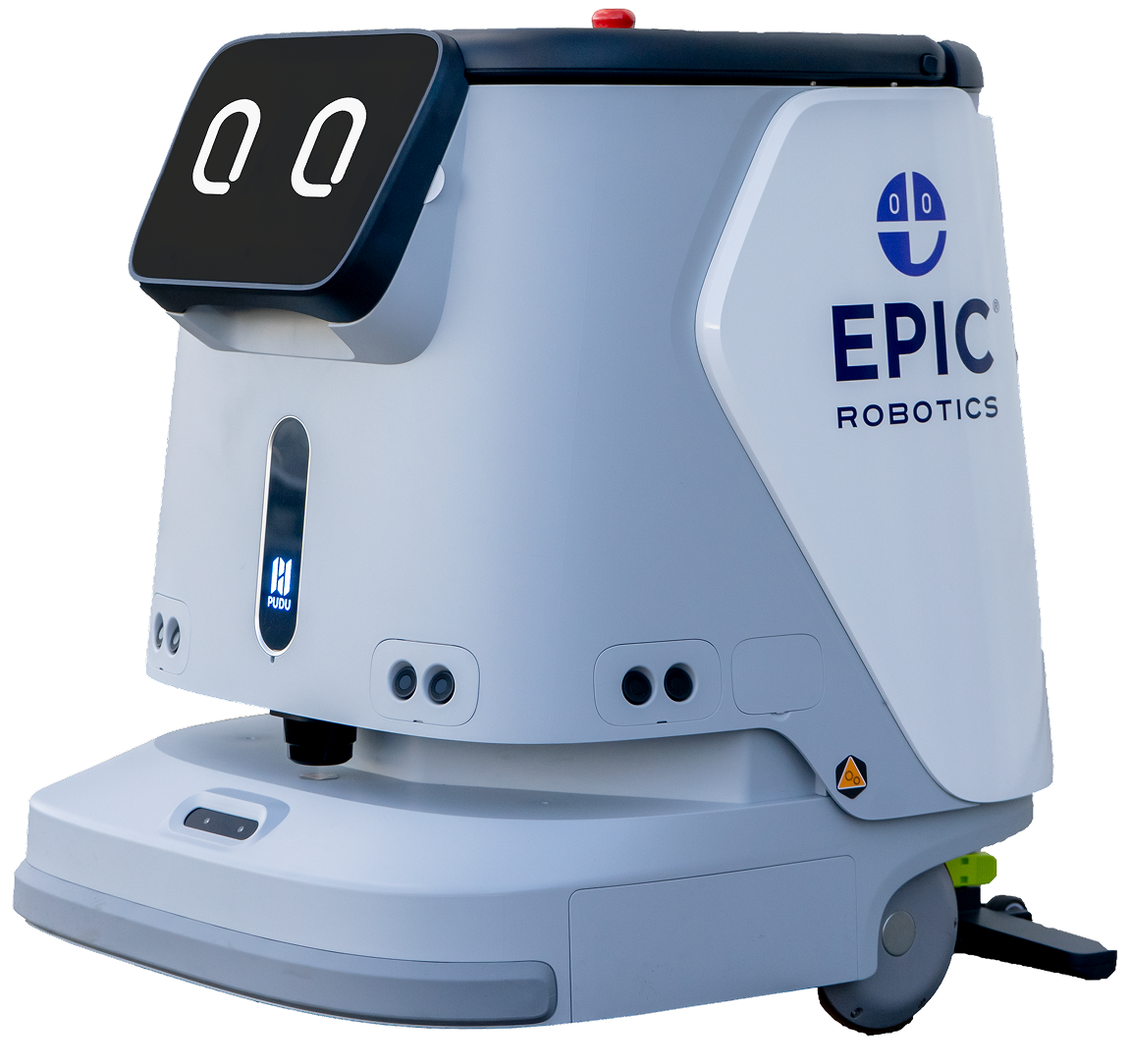
Autonomous robots hold a steady pace instead. The PUDU MT1 Max, Epic Robotics’ autonomous dry sweeper for large indoor and semi-outdoor spaces, covers up to 2,200 m²/h on a full cleaning pass and up to 7,000 m²/h in spot cleaning mode. For mixed commercial floors such as offices and retail, the PUDU CC1 covers 700 to 1,000 m²/h while switching between sweeping, scrubbing, vacuuming, and dust mopping. The useful comparison isn’t metres per hour on its own. It’s how much repetitive floor cleaning the robot removes from your existing schedule.
A Robot Offsets One to Two Full-Time Roles of Repetitive Work
A single robot can take over the repetitive floor cleaning of one to two full-time positions, according to NorthRaaS’s Canadian ROI comparison. The remaining team moves to washroom cleaning, detail work, and inspections, which robots can’t handle, instead of spending hours covering open floor space.
That reallocation is usually a stronger long-term case than a straight headcount cut, and it holds up better when you present it to staff.
The Savings Go Past the Wage Line
Cleaning roles carry some of the highest turnover in any sector, with annual rates between 100% and 200% in Canada, according to NorthRaaS. Every departure costs money in recruiting and retraining before a new hire reaches full productivity.
Automatic cleaning reports add another saving. Every PUDU robot logs each cycle in the PUDU Link app and dashboard, which supports audit documentation and reduces the supervisor time spent checking and signing off shifts. Both savings sit outside the direct labour line but land on the same budget.
The Hourly Cost Gap Between Manual and Autonomous Cleaning
The hourly cost difference is where robot cleaner savings are most visible. A fully loaded hourly cost of $22 to $28 is common for floor cleaning staff in most Canadian provinces, according to NorthRaaS. An autonomous robot’s running costs, by comparison, are limited to electricity, consumable brushes and filters, and scheduled service.
| Manual Cleaning | Autonomous Cleaning | |
|---|---|---|
| Cost per hour | $22–28, fully loaded | Electricity, consumables, and service only |
| Cleaning pattern | Varies by shift and operator | Same route every cycle |
| Off-hours coverage | Limited by shift scheduling | Runs without added staffing cost |
| Cleaning verification | Supervisor sign-off | Automatic cleaning report per cycle |
Your Hourly Wage Understates Your Real Cleaning Cost
Once benefits, payroll tax, WCB premiums, training, and shift premiums are added, a cleaner’s hourly cost climbs well above the base wage. That is why a fully loaded rate of $22 to $28 is common across Canadian provinces, even where the minimum wage sits between $15 and $18.25. Any comparison built on base wage alone understates the real saving, and it’s the most common mistake facilities make when running their own numbers.
Example: A 27,900 m² (300,000 sq ft) Distribution Centre
Here is how the numbers work for a large distribution centre. The figures are illustrative, built from the Canadian labour and market ranges above.
| Metric | Value |
|---|---|
| Facility type | Distribution centre |
| Facility size | About 27,900 m² (300,000 sq ft) |
| Cleaning staff | 2 full-time cleaners |
| Loaded labour rate | $25 an hour |
| Annual labour cost | About $104,000 |
| Robot cost (low end of market range) | About $50,000 |
| Annual service cost (estimate) | About $6,000 |
| Floor work taken over by the robot | One full-time role, about $52,000 a year |
| Net annual benefit | About $46,000 |
| Estimated payback | About 13 months |
At up to 2,200 m²/h, a PUDU MT1 Max covers this floor in about 12 to 13 hours of full-coverage sweeping. In practice, the site splits it into zones across two overnight runs, or runs around the clock with the automatic charging station. In forklift-heavy aisles and loading docks, its vehicle-aware obstacle avoidance and forklift safety lights help it work safely alongside traffic.
Labour Savings Are the Starting Point, Not the Full Return
Even with one full-time role’s worth of floor work automated, this facility still keeps staff for edge cleaning, washrooms, and spill response. Build the business case around reducing repetitive floor cleaning hours rather than eliminating roles. That argument holds up better with a CFO and with your team.
Consistent routes also reduce missed areas and repeat cleaning, lower the risk of manual handling injuries, and free up overnight hours without added staffing cost. Poor floor conditions carry a cost of their own too. Slower forklifts, more slip hazards, and faster wear on sensors and conveyors rarely show up in a cleaning line item, but they show up somewhere in the budget.
Is Your Facility a Good Candidate for a Cleaning Robot?
Facility size, cleaning frequency, and labour cost decide this more than any spec sheet. Run through both lists before building a business case.
Facilities That Recover the Investment Fastest
- 4,600 m² (50,000 sq ft) or more of repeatable hard floor
- A daily cleaning schedule
- Three or more hours a day of repetitive floor cleaning
- An overnight or off-peak cleaning window
- Loaded labour cost of $25 an hour or more
- A location in a higher-wage province
Facilities Where the Case Is Harder to Defend
- Under 1,860 m² (20,000 sq ft), the size where ROI typically starts to strengthen
- Cleaning only two or three times a week
- A cluttered or constantly changing layout
- Loaded labour cost at the low end of the Canadian range, around $22 an hour
- A temporary or short-term site
Which Epic Robotics Robot Fits Your Facility?
Epic Robotics supplies commercial cleaning robots from PUDU, and the right fit depends on your floors and how they get dirty.
| Facility type | Best fit | Coverage |
|---|---|---|
| Offices, retail, and healthcare with mixed wet and dry cleaning | PUDU CC1 | 700–1,000 m²/h |
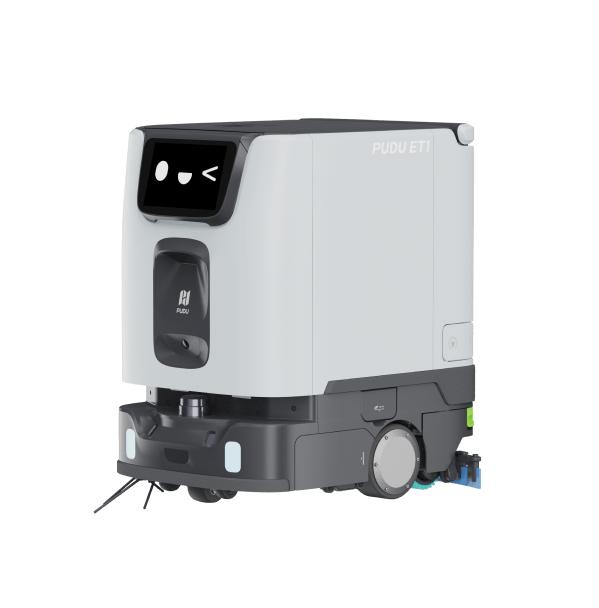
| Supermarkets and retail floors that need hot scrubbing | PUDU ET1 | 300–720 m²/h |
| Warehouses, distribution centres, loading docks, parkades, and cold rooms down to -10°C | PUDU MT1 Max | Up to 2,200 m²/h |
| Carpeted offices and fine-dust areas | PUDU MT1 Vac | Up to 1,400 m²/h |
Pricing depends on the model, configuration, and charging or docking setup. Contact Epic Robotics for a quote and a free assessment of your facility, and we’ll recommend the right robot for your floors.
Calculate Your Own ROI in Four Simple Steps
Four numbers determine your payback period, and you already have all of them. Run this before any vendor conversation, not after.
- Daily cleaning labour cost: hours spent on floor cleaning per day, multiplied by your loaded hourly rate.
- Annual cleaning cost: daily cost, multiplied by cleaning days per year.
- Estimated annual savings: current manual hours minus robot-supported manual hours, multiplied by your loaded rate and by cleaning days per year.
- Payback period: robot cost divided by annual net savings.
Talk to Our Team About Your Facility
The ROI formula above takes about ten minutes and tells you more than any general payback claim, because it’s built on your labour cost, your floor area, and your actual cleaning schedule.
When you have your numbers, book a free facility assessment with the Epic Robotics team. We’ll walk your site with you, match the right commercial robot to your floors, and give you pricing to test against your own ROI calculation. Contact Epic Robotics for pricing and a free assessment.
Recent Blog
4-in-1 Scrubber or Industrial Sweeper? Pick the Right Robot

October 25, 2026
Autonomous Cleaning Robot ROI: Costs, Payback and Savings
October 24, 2026
Do Cleaning Robots Work in Cold Storage and Winter Warehouses?
October 24, 2026

Ready to Get Started?
All-in-One Cleaning Solution:Sweeping, Scrubbing,
Vacuuming and Dust-mopping


