




Minimum Wage by Province: What It Actually Costs to Staff Floor Cleaning

Minimum wage sets the legal floor, not the real cost of staffing commercial floor cleaning. In 2026, general minimum wages across Canada range from $15.00 an hour in Alberta to $20.17 in Nunavut, while median pay for janitors and heavy-duty cleaners runs from $19.00 to $28.00. Add roughly 10% to 15% for employer payroll costs, and a realistic in-house labour cost is closer to $21 to $32 an hour before equipment, supplies, supervision, and other overhead.
That difference matters when you budget a warehouse, hospital, retail floor, or multi-site portfolio. Commercial cleaning is provincially regulated, so the labour baseline changes when your operation crosses a provincial border. And the biggest variable is usually not the statutory minimum wage. It is the local market rate you actually have to pay to recruit and retain cleaners.
For large, open hard-floor areas with predictable nightly routes, autonomous floor cleaning can change that labour equation. For smaller, fragmented spaces, edges, washrooms, and detail work, human crews still make more sense.
TL;DR
- General minimum wages range from $15.00 an hour in Alberta to $20.17 in Nunavut
- Most janitors earn well above the legal floor. The national average sits at $37,830 a year, or $19.40 an hour
- Insured commercial cleaning contractors typically bill $30 to $60 an hour per cleaner, all costs included
- Labour makes up 50 to 70% of a usual cleaning quote, so provincial wage swings move the full price
- A cleaner wet mopping covers roughly 1,700 square feet an hour, while a walk-behind scrubber covers up to 16,000
- Autonomous floor scrubbers now offer a real cost comparison against a crew. Payback depends on your facility, floor area, and labour costs
What Does Floor Cleaning Labour Cost in Canada by Province in 2026?
If you are planning a cleaning budget, start with the actual market wage rather than just the minimum wage. The minimum wage tells you the lowest legal rate an employer can generally pay. The median janitorial wage gives you a better idea of what workers actually earn in the market.
The table below pairs each general minimum wage with the median hourly wage that Job Bank reports for janitors, caretakers and heavy-duty cleaners under NOC 65312.
| Province or Territory | Minimum Wage | Median Janitor Wage | Gap |
|---|---|---|---|
| Alberta | $15.00 | $20.03 | +$5.03 |
| Saskatchewan | $15.70 | $20.62 | +$4.92 |
| New Brunswick | $15.90 | $20.00 | +$4.10 |
| Newfoundland and Labrador | $16.35 | $20.81 | +$4.46 |
| Manitoba | $16.40 | $20.15 | +$3.75 |
| Quebec | $16.60 | $21.00 | +$4.40 |
| Nova Scotia | $17.00 | $19.00 | +$2.00 |
| Northwest Territories | $17.20 | $23.12 | +$5.92 |
| Prince Edward Island | $17.30 | $20.77 | +$3.47 |
| Ontario | $17.95 | $22.00 | +$4.05 |
| British Columbia | $18.25 | $24.65 | +$6.40 |
| Yukon | $18.51 | $28.00 | +$9.49 |
| Nunavut | $20.17 | $25.00 | +$4.83 |
These figures show why minimum wage is a poor standalone benchmark for commercial cleaning. A cleaner in Alberta may legally earn $15.00 an hour, but the median wage for the occupation is about $20.03. In Yukon, the difference is even larger: $18.51 minimum wage versus a $28.00 median wage.
Alberta Looks Cheap on Paper But It Isn't
Alberta has one of Canada's lowest general minimum wages at $15.00 an hour, but the median wage for janitors, caretakers and heavy-duty cleaners is about $20.03. That $5.03 difference is a useful reminder that the legal minimum and the market rate are not the same thing. The same pattern appears across Canada. In Nova Scotia, the gap is $2.00, while Yukon has a gap of $9.49 based on the current figures above.
The gap matters because your labour budget is shaped by the local market, not just legislation. If your facility already has to pay well above minimum wage to attract reliable cleaners, a statutory wage increase may have less effect on your actual payroll than the market rate does.
Commercial Floor Cleaning Staffing Realities
Three things have the biggest effect on your floor care labour budget: the wage you pay, the full cost of employing the worker, and the number of paid hours your floors require.
The Wage Retention Paradox
Pay the legal floor and you pay twice. Cleaning carries reported annual turnover past 200 percent in parts of the industry. Every exit costs recruiting time, training hours, and a person who knows which loading dock floods in March. Crews that stay tend to clean faster.
Your Real Labour Burden
Never build a floor-care budget around the hourly wage alone. Employer CPP and EI contributions, vacation pay, compensation premiums, benefits and other employment costs all affect the actual cost of employing someone. Non-wage benefits can include employer-sponsored insurance, leave entitlements and employer payroll contributions.
Contract Indexing Matters
Put an annual wage adjustment clause in every multi-year cleaning agreement. Without one, an October 1 increase lands entirely on the provider, and the provider recovers it by cutting hours on your floors. Facility teams read that as falling service quality rather than a pricing problem.
How Many Labour Hours Are Your Floors Really Getting?
Divide cleanable square footage by your production rate. A cleaner wet mopping with a standard 16-ounce mop covers roughly 1,700 square feet per hour. A 20-inch walk-behind scrubber covers up to 16,000, which is about nine times the output under ISSA 612 cleaning times. Run your own site through it. Say your team spends three hours a night on floor care, five nights a week, 250 nights a year. That is 750 paid hours.
| Scenario | Loaded Rate | Annual Floor Labour Cost |
|---|---|---|
| In-house, Ontario | $25.30 | $18,975 |
| In-house, British Columbia | $28.35 | $21,262 |
| Contracted, mid-market rate | $45.00 | $33,750 |
Three hours a night is modest for a distribution centre or a hospital service corridor. Double it, and you are looking at a $38,000 to $67,500 annual line for pushing a machine in straight lines. That is the number automation goes after.
Why the Number on the Offer Letter Is Not Your Real Cleaning Cost
Three numbers describe the same worker: wage, fully loaded cost, and contractor billing rate. Mixing them up is the fastest way to build a bad projection.
Wage: What lands on the pay stub. In Ontario, $22.00.
Fully loaded cost: Add employer CPP at 5.95%, employer EI at roughly 2.3%, workers' compensation premiums through WSIB or WorkSafeBC, vacation pay at 4 to 6%, and the employer health tax in Ontario and British Columbia. Typical Canadian burden runs 10 to 15% above gross. Ontario lands near $25.30.
Billing rate: What a contractor charges you. Commercial cleaners bill $30 to $60 per hour, which folds in wages, payroll costs, supplies, insurance, supervision, and margin. That number is not pay.
Trained operators sit at the top of the wage band. Anyone running an auto scrubber, a burnisher, or a steam extractor commands $20 to $25 an hour or more, because the skill is scarcer than general cleaning. Same person, roughly double the number, top to bottom. Compare a $22 wage against a robot's operating cost and the board deck breaks before you start.
One more figure worth pinning to the wall. Labour accounts for 50 to 70% of a commercial cleaning quote. Wage movement does not nudge your cleaning budget. Wage movement drives it.
Where Robotic Floor Cleaning Fits
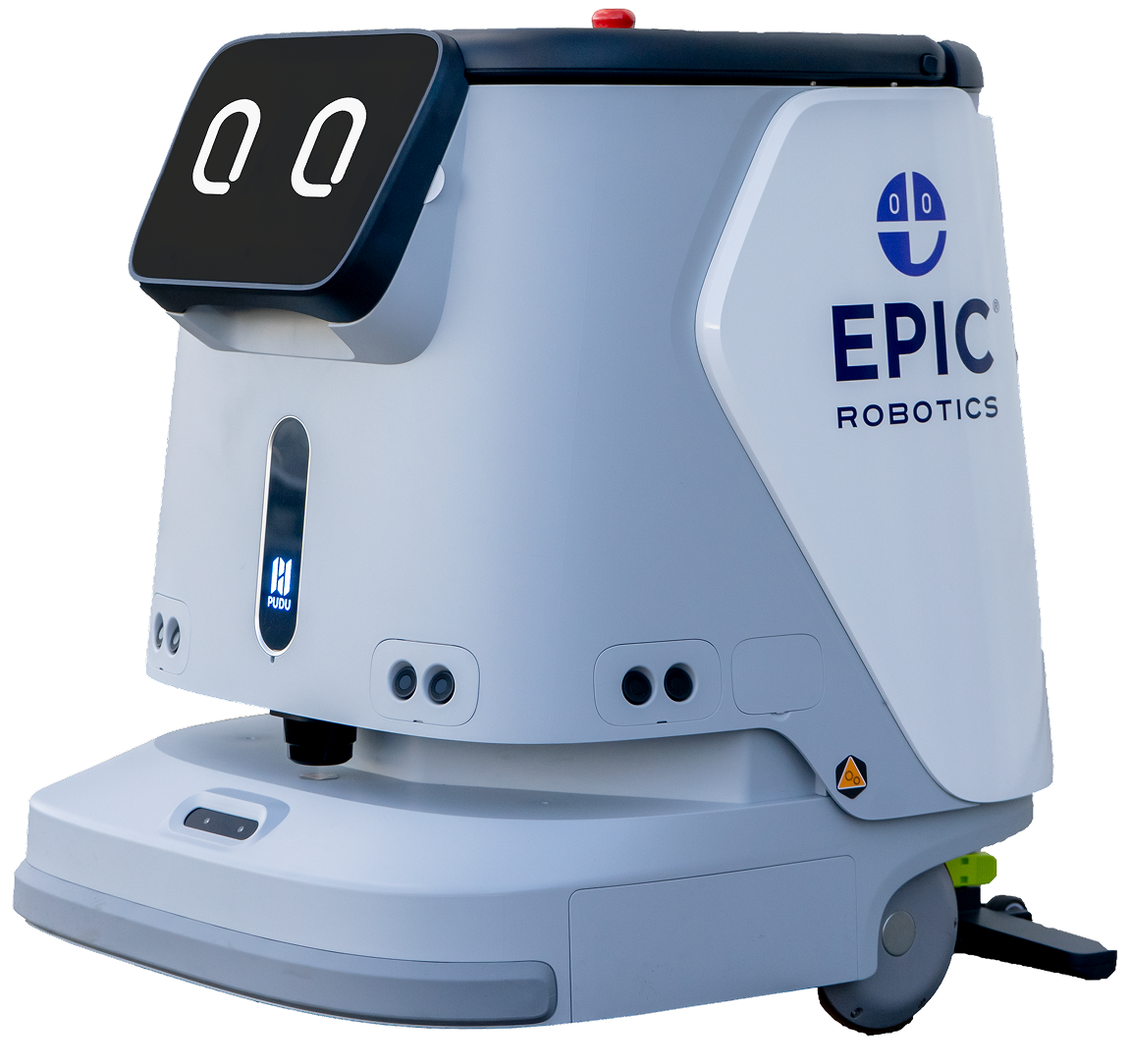
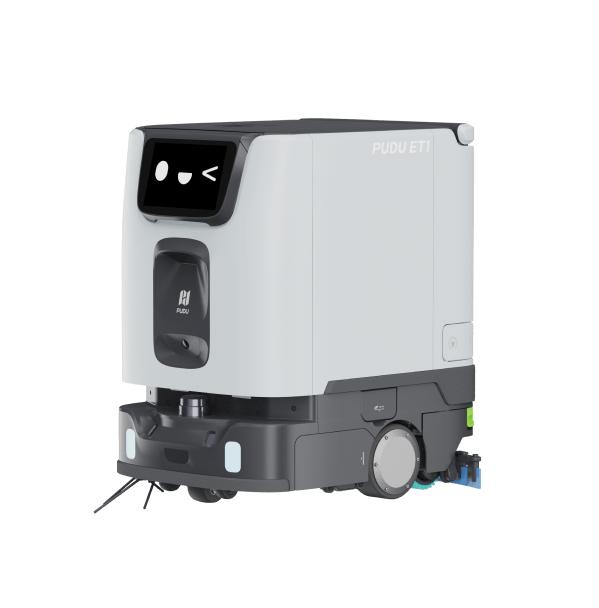
An autonomous floor cleaning robot is most valuable when it can repeatedly perform a defined route with limited human intervention. Large warehouses, distribution centres, retail floors, airports and other facilities with substantial open hard-floor areas can offer good conditions for this type of automation. Mid-size commercial units such as the PUDU CC1 sweep, scrub, vacuum, and dust mop, switching between modes as each area needs.
Automation does not necessarily mean eliminating an entire cleaning staff. A cleaner may spend part of a shift scrubbing open floors and the rest of the shift handling work that an autonomous machine cannot perform effectively.
If a cleaner works an eight-hour shift but only four hours are spent on repetitive floor cleaning, the automation opportunity is closer to those four hours. The remaining time may still be needed for other cleaning duties.
Compare These Wages to Your Own Facility
National wage figures can give you a useful starting point, but they cannot tell you whether autonomous floor cleaning will make financial sense in your facility. You need your own cleanable floor area, floor-cleaning hours, cleaning frequency, fully loaded labour cost and current contractor cost, if applicable. You then need to determine how much of that work the robot can realistically handle and what it will cost to operate.
Epic Robotics builds the model around your facility and industry rather than a national average. Send us your cleanable floor area, nightly floor cleaning hours and the province where you operate. We estimate your current labour cost, identify the floor cleaning work that is suitable for automation and provide a site-specific payback range.
Recent Blog
4-in-1 Scrubber or Industrial Sweeper? Pick the Right Robot

October 25, 2026
Autonomous Cleaning Robot ROI: Costs, Payback and Savings
October 24, 2026
Do Cleaning Robots Work in Cold Storage and Winter Warehouses?
October 24, 2026

Ready to Get Started?
All-in-One Cleaning Solution:Sweeping, Scrubbing,
Vacuuming and Dust-mopping


